




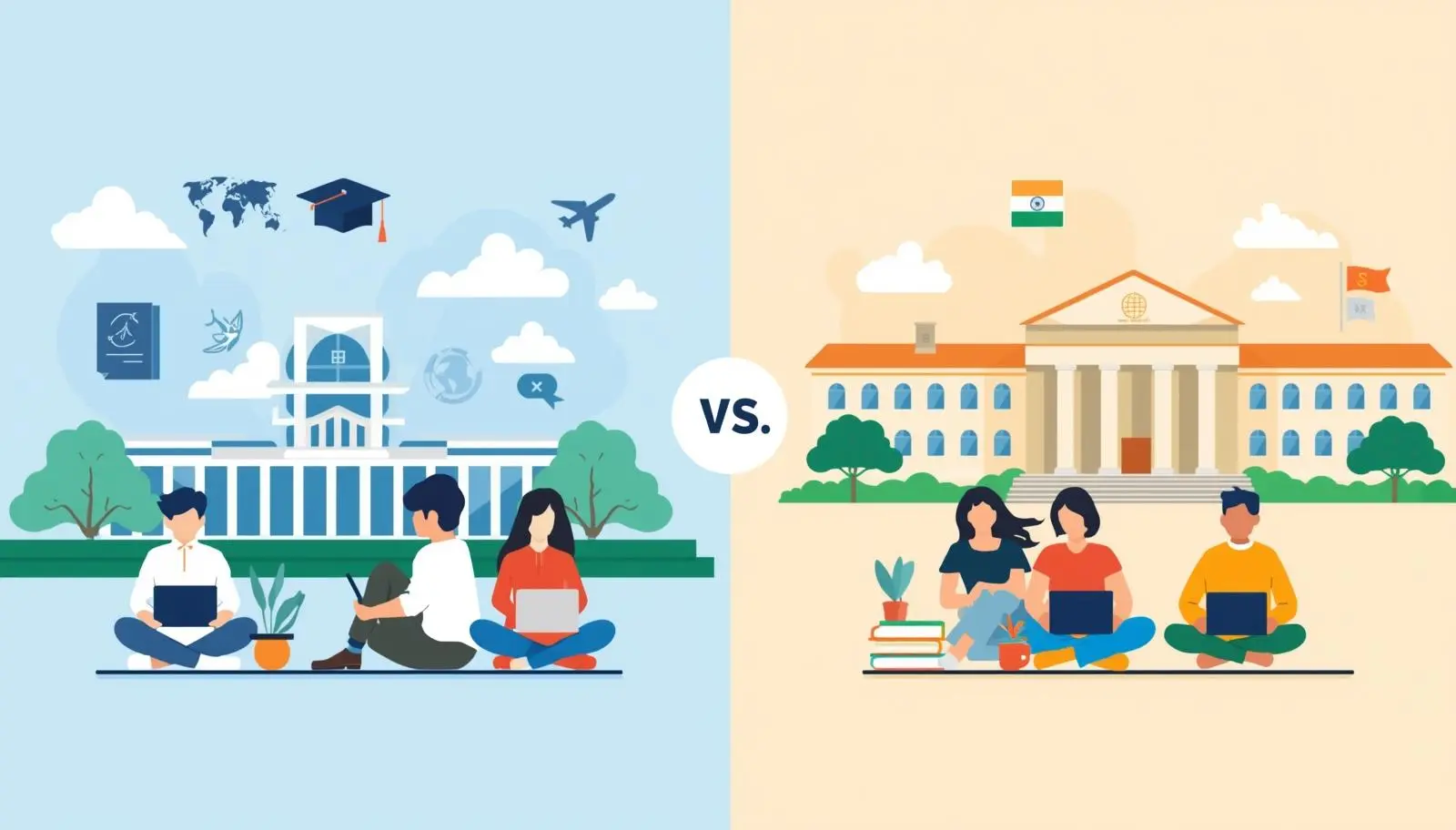
Choosing between studying in India or going abroad is one of the most important decisions for Indian students today. With global exposure becoming more accessible and Indian institutions continuously evolving, the debate around Foreign Education vs Indian Education has become more relevant than ever.
Students and parents often feel confused while comparing quality, costs, career outcomes, and long-term benefits. This blog offers a clear, unbiased, and detailed comparison to help you understand indian education and foreign education, so you can make an informed academic decision based on your goals, budget, and career aspirations.
Main Concept Explanation: Foreign Education vs Indian Education
At its core, Foreign Education vs Indian Education is a comparison of two distinct education ecosystems.
The Indian education system is traditionally structured, exam-oriented, and competitive, with a strong focus on theoretical knowledge. On the other hand, foreign education systems, especially in countries like the UK, USA, Canada, Australia, and Europe, focus more on practical learning, research, flexibility, and global exposure.
Understanding the indian education system vs foreign education system helps students align their learning style with the right academic environment.
Indian Education System: An Overview
India has one of the largest education systems in the world. It produces millions of graduates every year across diverse fields.
Key Characteristics of Indian Education
- Structured curriculum defined by boards and universities
- Strong emphasis on examinations and marks
- Limited flexibility in course selection
- Highly competitive entrance exams
- More affordable compared to foreign education
Strengths of Indian Education
- Cost-effective tuition fees
- Strong foundation in core subjects
- Prestigious institutions like IITs, IIMs, AIIMS, and IISc
- Familiar culture, language, and environment
Limitations of Indian Education
- Limited focus on practical exposure
- Large class sizes
- Less emphasis on soft skills and critical thinking
- Fewer global networking opportunities
Foreign Education System: An Overview
Foreign education refers to studying in international universities outside India, mainly in countries with globally recognised education systems.
Key Characteristics of Foreign Education
- Student-centric and flexible learning
- Focus on practical skills, projects, and research
- Continuous assessment rather than one-time exams
- Strong industry-academia collaboration
- Multicultural learning environment
Strengths of Foreign Education
- Globally recognised degrees
- Advanced infrastructure and teaching methods
- Exposure to international work culture
- Better focus on innovation and research
- Opportunities for part-time work and post-study employment
Limitations of Foreign Education
- Higher cost compared to Indian education
- Cultural adjustment challenges
- Visa and immigration regulations
- Distance from family
Key Benefits: Indian Education vs Foreign Education
Benefits of Indian Education
- Affordable education and living costs
- Strong academic competition builds discipline
- Suitable for students aiming for government jobs or Indian corporate roles
- Easier admission process for many courses
Benefits of Foreign Education
- International exposure and global mindset
- Skill-based learning aligned with industry needs
- Better employability in global job markets
- Access to world-class research and facilities
Eligibility and Admission Requirements
Eligibility for Indian Education
- Completion of Class 12 for undergraduate programmes
- Graduation for postgraduate courses
- Entrance exams such as JEE, NEET, CAT, GATE, etc.
- Cut-offs based on marks and ranks
Eligibility for Foreign Education
- Academic transcripts (Class 10, 12, or graduation)
- English language proficiency (IELTS, TOEFL, or alternatives)
- Statement of Purpose (SOP)
- Letters of Recommendation (LORs)
- Standardised tests (SAT, GRE, GMAT – depending on course and country)
Eligibility criteria vary by country and university, making expert guidance valuable during the application process.
Top Study Options and Destinations
Popular Study Options in India
- Engineering and Technology
- Medicine and Healthcare
- Management and MBA
- Law and Civil Services
- Science and Research
Popular Study Destinations Abroad
- UK – Shorter degree duration, strong academic reputation
- USA – Research-oriented and flexible education
- Canada – Affordable, PR-friendly, high-quality education
- Australia – Strong post-study work opportunities
- Europe – Low or no tuition fees in some countries
Top Foreign Universities (Examples)
- University of Oxford
- University of Cambridge
- Harvard University
- University of Toronto
- University of Melbourne
Learning Style Comparison: Indian vs Foreign Education
|
Aspect |
Indian Education |
Foreign Education |
|
Teaching Style |
Theory-focused |
Practical & research-based |
|
Assessment |
Exams and marks |
Projects, assignments, exams |
|
Flexibility |
Limited |
High |
|
Class Size |
Large |
Small to medium |
|
Industry Exposure |
Limited |
Strong |
This comparison clearly shows how indian education system vs foreign education system differs in approach and outcomes.
Admission Process: Step-by-Step Guide
Indian Education Admission Process
- Choose course and institution
- Prepare for entrance exams
- Apply through centralised or institute-level counselling
- Merit-based seat allocation
- Complete admission formalities
Foreign Education Admission Process
- Shortlist country, course, and universities
- Check eligibility and entry requirements
- Prepare SOP, LORs, and academic documents
- Submit applications
- Receive offer letter
- Apply for student visa
- Arrange finances and accommodation
- Travel and enrol
Costs, Fees, and Duration
Cost of Indian Education
- Undergraduate: ₹50,000 – ₹3,00,000 per year
- Postgraduate: ₹1,00,000 – ₹5,00,000 per year
- Living expenses vary by city
Cost of Foreign Education
- Tuition fees: £10,000 – £40,000 per year (country-dependent)
- Living expenses: £8,000 – £15,000 per year
- Scholarships and part-time work can reduce costs
Course Duration Comparison
- Indian UG: 3–4 years
- Indian PG: 2 years
- Foreign UG: 3–4 years
- Foreign PG: 1–2 years
Career Opportunities and Job Outcomes
Career After Indian Education
- Strong domestic job market
- Suitable for government exams and PSU roles
- Growth depends on institution reputation and skills
Career After Foreign Education
- Access to global job markets
- Higher employability in multinational companies
- Post-study work visas in many countries
- Better exposure to international work culture
Common Myths and Mistakes
Myth 1: Foreign education guarantees a job
Reality: Skills, performance, and networking matter more than location.
Myth 2: Indian education has no global value
Reality: Indian degrees are respected when combined with skills and experience.
Myth 3: Foreign education is only for rich students
Reality: Scholarships, loans, and affordable countries make it accessible.
Common Mistakes to Avoid
- Choosing a country without career research
- Ignoring total cost of study
- Applying without proper documentation
- Relying on unauthorised agents
Expert Tips and Best Practices
- Define your career goals before choosing education system
- Compare ROI, not just fees
- Research post-study work options
- Focus on skill development alongside academics
- Seek guidance from experienced education consultants
Conclusion
The comparison of Foreign Education vs Indian Education is not about which is superior, but about which is right for you. Indian education offers affordability and strong academic foundations, while foreign education provides global exposure, skill-based learning, and international career opportunities. By understanding the differences between indian education and foreign education, students can align their academic journey with their long-term goals. If you are still unsure about choosing the right education path, WTS Study Abroad Consultant can provide personalised guidance and expert support to help you make a confident and informed decision..